
Mary Claire Haver on Menopause, Muscle & Longevity
Arabella Sinclair
Publication date May 18, 2026
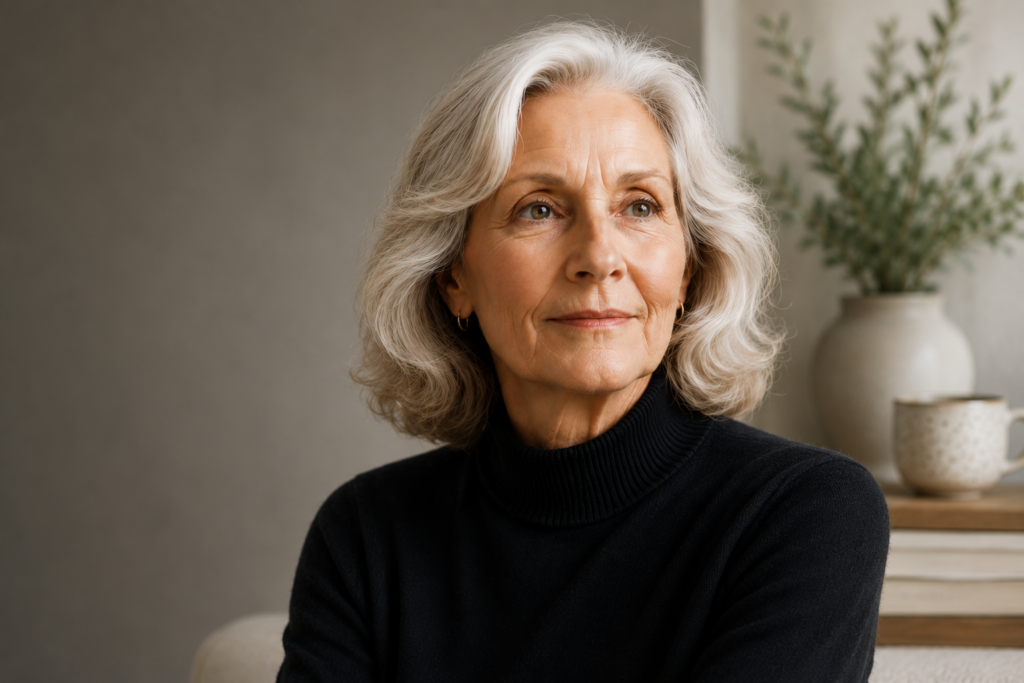
Image Credit:Editorial illustration generated with AI assistance via OpenAI image generation tools for conceptual publication and artistic editorial use.
.
An Exclusive Conversation on Hormones, Health and Thriving
For generations, menopause was spoken about quietly.
Sometimes awkwardly.
Sometimes dismissively.
Often inaccurately.
Millions of women entered one of the most biologically transformative phases of life with remarkably little understanding of what was truly happening within their bodies.
Fatigue became normalised.
Brain fog became minimised.
Muscle loss became accepted.
Hormonal shifts became trivialised as inevitable suffering.
But today, a new movement is emerging.
One grounded not in fear — but in science, empowerment, longevity, and physiological intelligence.
At the forefront of this global conversation stands Dr. Mary Claire Haver, whose work has become increasingly influential in reshaping how modern society understands menopause, muscle preservation, metabolic health, and healthy ageing.
In this exclusive editorial conversation, we explore the intersection between hormones, longevity, strength, nutrition, and the extraordinary resilience of the female body.
Because perhaps the most important message emerging from modern women’s health science is this:
Menopause is not the end of vitality.
It may instead become the beginning of a more intentional, informed, and powerful chapter of life.
“Women Were Never Given the Full Story”
Celeste Moreau:
For decades, menopause seemed culturally misunderstood — almost hidden in silence. Why do you believe this happened?
Mary Claire Haver:
For a very long time, women’s health simply did not receive the scientific attention it deserved. Menopause was often framed as something women merely had to endure rather than understand physiologically.
The result was that millions of women experienced profound hormonal transitions without being properly educated about what was happening to their metabolism, sleep, mood, muscle mass, cardiovascular health, or cognition.
But the science has evolved dramatically.
We now understand menopause not as a minor inconvenience — but as a major biological transition that deserves informed, proactive care.
And importantly, women deserve to know that suffering unnecessarily is not the benchmark of healthy ageing.
Hormones and the Entire Body
One of the most remarkable revelations in modern longevity science is the understanding that hormones influence virtually every system within the body.
Not merely reproduction.
But:
-
Brain function
-
Cardiovascular health
-
Bone density
-
Muscle preservation
-
Metabolism
-
Sleep quality
-
Mood regulation
-
Inflammatory response
The decline in oestrogen occurring during menopause can significantly affect these systems simultaneously.
Which is why many women describe feeling as though their bodies suddenly become unfamiliar.
“Muscle Is One of the Most Important Longevity Organs”
Celeste Moreau:
One topic increasingly appearing in your work is muscle preservation. Why is this so critical during menopause?
Mary Claire Haver:
Because muscle changes everything.
Muscle is not simply aesthetic tissue. It is deeply metabolically active tissue that supports blood sugar regulation, mobility, balance, independence, and healthy ageing overall.
As oestrogen declines, women often experience accelerated muscle loss if they are not actively preserving it through resistance training and adequate protein intake.
And this matters profoundly because muscle helps protect long-term quality of life.
The ability to remain physically capable into later decades is one of the greatest predictors of healthy ageing.
The Midlife Metabolic Shift
Many women entering menopause report a frustrating phenomenon:
The lifestyle habits that once maintained body composition, energy levels, and recovery suddenly appear less effective.
This is not imagined.
Hormonal shifts influence how the body stores fat, responds to insulin, regulates appetite, preserves muscle tissue, and utilises energy.
The solution, however, is not hopelessness.
It is adaptation.
Modern science increasingly supports strategies centred around:
-
Resistance training
-
Protein optimisation
-
Sleep prioritisation
-
Stress management
-
Cardiovascular fitness
-
Anti-inflammatory nutrition
-
Recovery-focused living
Not punishment.
But intelligent physiological support.
“Strength Training Becomes Non-Negotiable”
Celeste Moreau:
There seems to be a growing emphasis on strength training specifically for women in midlife. Why?
Mary Claire Haver:
Because the body responds remarkably well to challenge — even later in life.
Resistance training supports muscle retention, bone density, insulin sensitivity, posture, metabolic health, and confidence simultaneously.
It may be one of the most powerful interventions we possess for healthy ageing.
And importantly, women should understand that strength training is not about becoming physically intimidating.
It is about remaining physically capable.
That distinction changes everything.
Menopause and Emotional Identity
Beyond physiology, menopause often intersects with identity itself.
Many women experience emotional uncertainty during this transition.
A sense of losing familiarity with their bodies.
Changes in confidence.
Changes in sleep, energy, libido, recovery, mood.
Yet increasingly, modern wellness culture is reframing menopause not as decline —
but as recalibration.
A stage where women become more intentional about:
-
health
-
boundaries
-
movement
-
nourishment
-
recovery
-
self-respect
In many cases, women emerge from this phase stronger, wiser, and more biologically aware than ever before.
“Longevity Is About More Than Lifespan”
Celeste Moreau:
Modern longevity science seems increasingly focused on quality of life rather than simply extending years. Do you agree?
Mary Claire Haver:
Absolutely.
Longevity is not merely about surviving longer.
It is about preserving vitality.
The ability to move confidently.
To think clearly.
To remain independent.
To maintain energy and capability.
That’s why preserving muscle, metabolic health, sleep quality, and cardiovascular fitness matters so much.
We are no longer simply asking how long people live.
We are asking how well they live.
The Cultural Shift Around Women’s Health
Perhaps one of the most encouraging developments in modern medicine is that women’s health conversations are finally becoming more open, evidence-based, and empowering.
Topics once ignored are now entering mainstream discourse:
-
Hormonal health
-
Bone preservation
-
Perimenopause
-
Metabolic health
-
Strength training
-
Protein intake
-
Longevity science
And this visibility matters enormously.
Because information changes outcomes.
Thriving Rather Than Surviving
There is something deeply hopeful emerging from this new era of women’s wellness.
The understanding that midlife does not have to represent decline.
It can instead represent refinement.
A transition toward:
-
greater self-awareness
-
intentional living
-
stronger boundaries
-
better health practices
-
more intelligent recovery
-
purposeful movement
Modern women increasingly refuse to disappear quietly into biological deterioration.
And science increasingly supports their refusal.
Final Reflection
The future of healthy ageing may ultimately belong to those who understand that vitality must be protected intentionally.
That hormones matter.
That muscle matters.
That sleep matters.
That nourishment matters.
That movement matters.
And perhaps most importantly:
That women deserve access to the knowledge required to thrive through every biological stage of life.
Because menopause is not the conclusion of vitality.
It is a physiological transition that, when understood properly, can become the foundation for a stronger, healthier, and more empowered future.
And in many ways, that future may be one of the most important health conversations of the modern era.